Albania has a reputation problem. Most travelers picture its sparkling Riviera coastline and stop there. But inland, a completely different story is unfolding. The Albanian Alps and their surrounding valleys are pulling in hikers, cyclists, and culture seekers in record numbers. Valbona Valley receives over 100,000 hikers annually, a figure that surprises even seasoned Balkans travelers. This article walks you through the major mountain regions, iconic trails, cultural impact, and sustainability debates shaping Albanian mountain tourism today, so you can plan a smarter, richer adventure.
Table of Contents
- Understanding Albanian mountain tourism
- Iconic trails and adventure highlights
- Culture, hospitality, and local tourism impact
- Challenges, sustainability, and future outlook
- Our take: What most travelers overlook in Albanian mountain tourism
- Where to start your Albanian mountain adventure
- Frequently asked questions
Key Takeaways
| Point | Details |
|---|---|
| Diverse mountain trails | Albania offers both challenging and accessible mountain hiking routes for all experience levels. |
| Growing hospitality options | Mountain huts and rural guesthouses have expanded, supporting year-round adventure travel. |
| Sustainability matters | Balancing economic development with environmental protection is vital in mountain destinations. |
| Cultural immersion | Authentic rural encounters are a highlight, enriching the mountain tourism experience. |
Understanding Albanian mountain tourism
Mountain tourism in Albania means more than just hiking. It covers everything from multi-day trekking and rock climbing to village homestays, traditional food experiences, and cultural immersion in communities that have stayed largely unchanged for centuries. It is a fundamentally different experience from the beach resorts of Saranda or Vlora, and that contrast is exactly what draws an increasingly adventurous crowd.
The country’s mountain geography is staggering. The Albanian Alps (also called the Accursed Mountains, or Bjeshkët e Namuna in Albanian) dominate the north, offering jagged peaks, glacial valleys, and rivers that run ice-cold even in summer. Further south, ranges like Tomorr and Gramoz provide quieter, less-trafficked terrain for travelers who want solitude over spectacle.
Key mountain regions you should know:
- Valbona Valley: The crown jewel of Albanian mountain tourism, drawing hikers from across Europe
- Theth: A remote village and trailhead famous for the Blue Eye waterfall and traditional stone towers (kulla)
- Peaks of the Balkans: A tri-country trail crossing Albania, Montenegro, and Kosovo
- Tomorr National Park: A spiritual and scenic mountain in central Albania, far less visited
- Llogara Pass: A dramatic ridge connecting the mountains to the Riviera, with sweeping coastal views
The numbers back up the buzz. According to mountain tourism statistics, 70% of Shkodra’s tourists engage in mountain activities, turning this northern city into a gateway hub for alpine adventures. The hospitality industry impact in these regions is growing fast, with local guesthouses and rural accommodations absorbing much of the visitor flow.
Albania’s best mountain destinations are also beginning to attract travelers interested in sustainable, low-impact travel. The shift away from mass coastal tourism toward rural, community-based experiences reflects a broader global trend, and Albania is catching that wave early.
Pro Tip: Visit between late May and early October for clear trails and manageable crowds. July and August are peak season, so aim for June or September if you want cooler temperatures and quieter paths.
Iconic trails and adventure highlights
If there is one thing Albania does exceptionally well, it is dramatic trail scenery. The country punches well above its weight for a destination its size, and the nature adventures in Albania available here rival anything in the wider Balkans region.
The two trails that define Albanian mountain tourism are the Theth-Valbona hike and the Peaks of the Balkans. Here is how they compare:
| Trail | Distance | Duration | Elevation gain | Difficulty |
|---|---|---|---|---|
| Theth to Valbona | 17 km | 6 to 8 hours | 1,000 m | Moderate to challenging |
| Peaks of the Balkans | 192 km | 7 to 10 days | Varies | Moderate to difficult |
The Theth-Valbona hike remains the most iconic single-day mountain crossing in the country. You start in the stone-towered village of Theth, climb over a high pass at roughly 1,800 meters, and descend into the emerald-green Valbona Valley. The views from the top are genuinely jaw-dropping. Most hikers complete it in a single long day, though staying overnight in Theth first is strongly recommended.
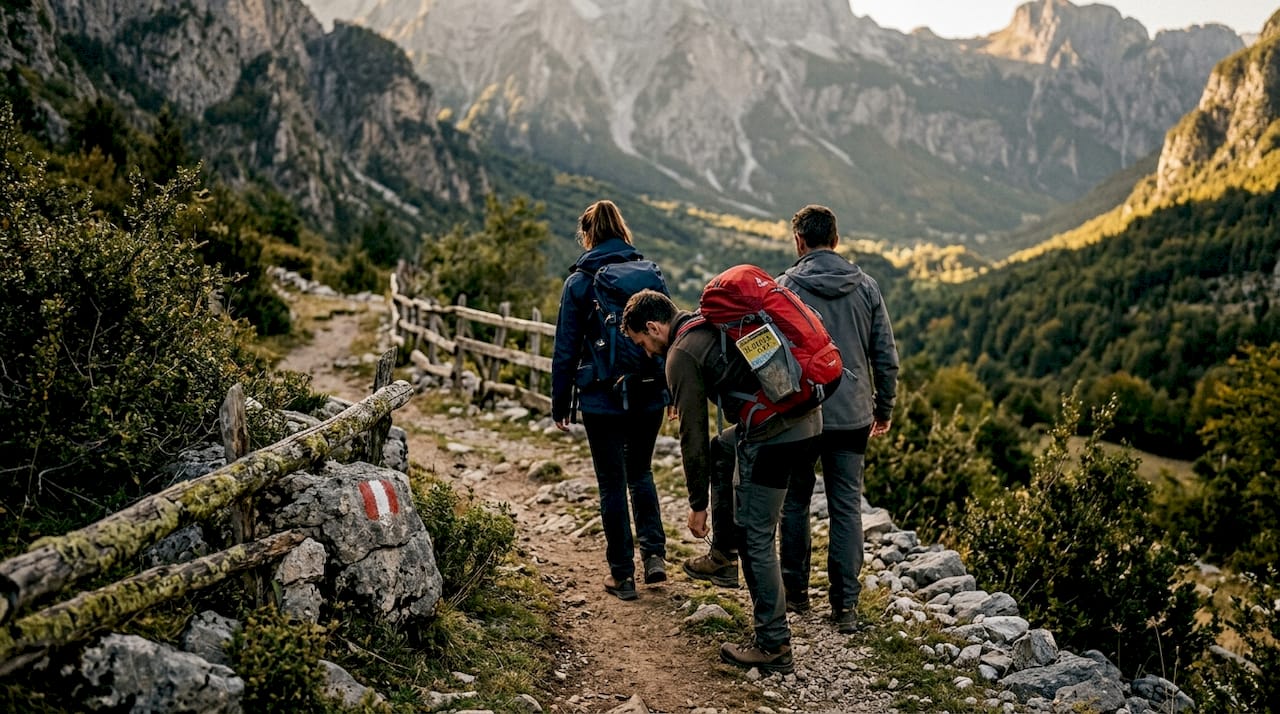
The Peaks of the Balkans is a different beast entirely. This 192 km multi-country loop crosses into Montenegro and Kosovo, threading through high alpine terrain and remote shepherd villages. It takes 7 to 10 days to complete fully, though many hikers tackle individual stages.
Beyond hiking, the Albanian Alps offer:
- Mountain biking on gravel roads connecting Theth, Valbona, and nearby villages
- Via ferrata climbing on limestone cliff faces near Shkodra
- Kayaking and rafting on the Valbona and Shala rivers
- Canyon swimming at spots like the Shala River blue lagoons
- Winter snowshoeing as infrastructure for cold-weather access continues to grow
“Albania’s northern mountain trails are increasingly recognized among Europe’s top adventure destinations, with visitor numbers growing year over year across Theth and Valbona.”
For travelers planning a trip to the north, the Tropoja adventure destinations page covers regional access routes, logistics, and accommodation options in detail. Getting the logistics right matters here because mountain transport can be limited and trail conditions vary by season.
Culture, hospitality, and local tourism impact
Albanian mountain villages are not just scenic backdrops. They are living communities with deep cultural traditions, and the tourism growth of recent years is actively reshaping them in ways both positive and complicated.
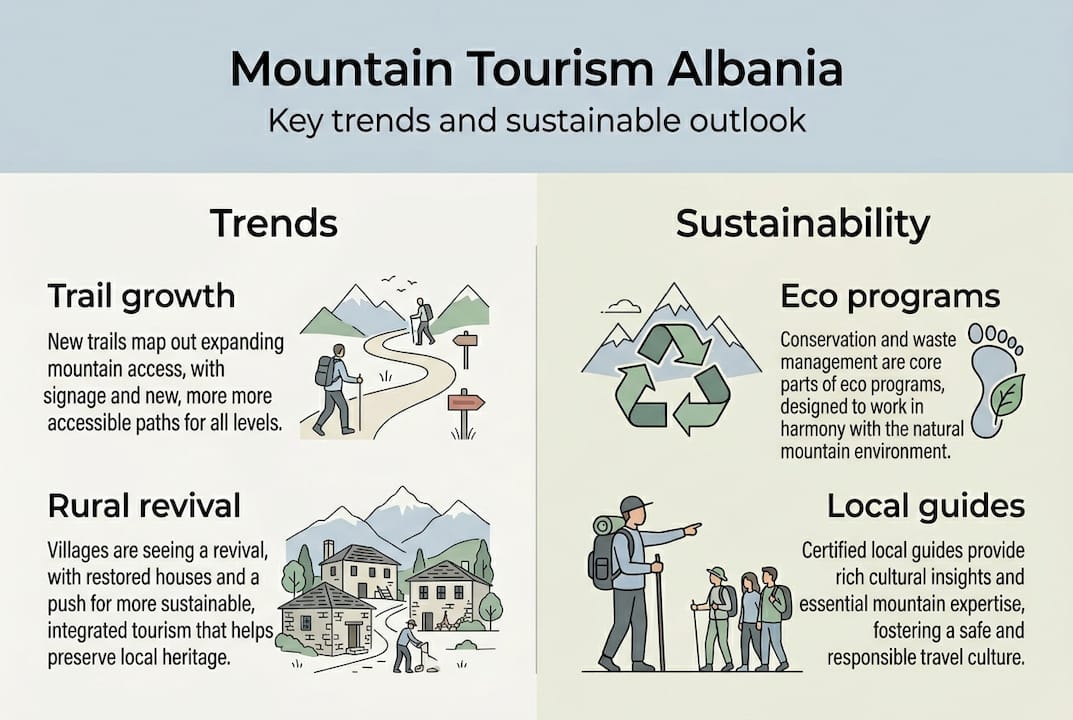
The most visible change is in accommodation. Mountain huts and rural guesthouses have expanded rapidly, with mountain huts growing 15% in 2023 alone. Many are family-run, offering home-cooked meals, shared sleeping areas, and a level of personal warmth that no hotel can replicate. Staying in one of these guesthouses is often the single most memorable part of a mountain trip in Albania.
The cultural impact breaks down into several key themes:
- Rural economic revival: Families in Theth and Valbona that once depended solely on subsistence farming now earn steady seasonal income from tourism
- Preservation of traditional architecture: Stone kulla towers and old farmhouses are being restored rather than abandoned, partly because they attract visitors
- Seasonal extension: With year-round tourism growing, including a notable rise in winter visits, mountain communities no longer face a total economic shutdown from October to May
- Cultural exchange: Travelers learning to cook fergese (a traditional Albanian dish), participating in folk festivals, and staying with local families bring new perspectives to both sides
| Trend | Impact level | Notes |
|---|---|---|
| Guesthouse growth | High | 15% increase in mountain huts (2023) |
| Winter tourism rise | Medium | Snowshoeing and ski-touring gaining traction |
| Female-led enterprises | Growing | Women increasingly managing rural guesthouses |
| Youth return migration | Early stage | Some young Albanians returning to run tourism businesses |
Albania welcomed 12.4 million foreign visitors in 2025, up 7% year over year. Mountain regions are capturing a growing slice of that total, especially as coastal areas reach saturation in peak summer months.
Pro Tip: When booking rural guesthouses, reach out directly if possible rather than through third-party apps. Many family-run places are not listed online, and local hosts can customize your stay in ways no booking platform allows. The travel tips for Albania section covers practical logistics for rural stays in depth.
Challenges, sustainability, and future outlook
Growth is rarely painless, and Albanian mountain tourism is no exception. The same surge that is reviving rural economies is also creating pressure on fragile ecosystems and raising hard questions about what kind of development the country actually wants.
The Albanian Parliament passed the Mountain Package legislation, which aims to boost rural investment and open mountain zones to broader commercial development. The debate it sparked reflects real tensions. Supporters of the Mountain Package point to job creation, infrastructure improvements, and the chance to lift remote communities out of poverty. Critics warn that prioritizing large-scale investment over the family-based hospitality model risks destroying the very authenticity that draws visitors in the first place.
Key sustainability concerns currently in focus:
- Habitat loss in protected areas like Valbona National Park from unregulated construction
- Trail erosion caused by rapidly increasing hiker volume without equivalent trail maintenance investment
- Waste management failures in remote areas where infrastructure simply was not designed for tourism scale
- EU red flags on state aid provisions and environmental protection loopholes within the Mountain Package legislation
- Overdependence on summer peaks rather than building genuinely diversified year-round demand
“The risk is clear: if Albania replaces its family-run mountain guesthouses with large resort developments, it trades a unique competitive advantage for a product that travelers can find anywhere in the world.”
The path forward requires choosing quality over quantity. Several NGOs and environmental tourism advocates are pushing for stricter zoning, community-led tourism governance, and certification programs for sustainable guesthouses. The debate is ongoing, but the outcome will shape what Albanian mountain tourism looks like a decade from now.
Our take: What most travelers overlook in Albanian mountain tourism
Most people who visit the Albanian Alps follow the same route: Shkodra, then Theth, then Valbona, then home. It is a great route. But it is also just the beginning of what is available.
The villages just off the main trails, places like Dragobi, Rrogam, and Cerem, offer encounters that are genuinely rare in modern European travel. You are not a tourist attraction there. You are a guest. That difference matters enormously for the quality of your experience.
We also think the family-based hospitality model is one of Albania’s most valuable and most threatened assets. Staying with a local family is not just a budget option. It is the richest version of the trip. You get real food, real stories, and a level of connection that five-star hotels cannot manufacture. Seek out these underrated mountain spots deliberately, not as an afterthought.
The sustainable traveler’s advantage here is real. Spending your money at family guesthouses, hiring local guides, and eating where locals eat keeps value inside the community. That is how mountain tourism stays healthy long enough for the next generation of travelers to enjoy it.
Where to start your Albanian mountain adventure
Planning a mountain trip in Albania does not need to be complicated, but getting the details right makes a real difference between a frustrating experience and an unforgettable one.
TravelTipsAlbania.com brings together everything you need in one place. From the travel tips for Albania that cover transport, budgeting, and seasonal timing, to destination-level guides built around what actually works on the ground. Whether you are planning your first alpine crossing or looking to go deeper into rural communities beyond the main trails, the complete Albania guide gives you a local perspective you will not find in generic travel resources. Start planning smarter, and start discovering the Albania most visitors never reach.
Frequently asked questions
What are the most popular mountain trekking routes in Albania?
The Theth-Valbona trail and Peaks of the Balkans loop are the most renowned, with the former covering 17 km in 6 to 8 hours and the latter spanning a 192 km multi-country route over 7 to 10 days.
Is mountain tourism in Albania year-round?
Yes, and it is growing fast in the off-season. Mountain huts grew 15% in 2023, and winter snowshoeing and cold-weather trekking are becoming more accessible as infrastructure improves.
What is the impact of mountain tourism on rural communities?
Mountain tourism is driving rural economic revival and helping preserve traditional architecture, but rapid development risks include habitat loss, trail degradation, and the replacement of family-run guesthouses with larger commercial operations.
Where can I find trusted resources to plan a mountain tourism trip in Albania?
TravelTipsAlbania.com offers practical, locally informed guides covering trails, accommodation, transport, and cultural context for planning any Albanian mountain adventure.