Albania sits on the Adriatic and Ionian coasts alongside some of Europe’s priciest destinations, yet it consistently delivers beach towns, mountain hikes, and vibrant city life at a fraction of what you’d spend in Greece or Italy. Food prices in Albania nearly match the EU average index, yet meals still cost a fraction of what you’d pay across the Adriatic. That gap is the key to everything. This article breaks down exactly why Albania is so affordable, what you can realistically expect to spend, and how to squeeze every bit of value out of your visit before the rest of the world catches on.
Table of Contents
- The roots of Albania’s affordability
- Comparison with neighboring destinations
- Everyday costs for visitors: food, lodging, and transit
- How to maximize savings without sacrificing experience
- Why Albania’s affordability won’t last forever: our take
- Plan your affordable Albanian adventure
- Frequently asked questions
Key Takeaways
| Point | Details |
|---|---|
| Economic factors | Low wages and market conditions make Albania consistently budget-friendly for travelers. |
| Lower travel costs | Meals, lodging, and transport cost less in Albania than in neighboring countries like Greece and Italy. |
| Maximizing savings | Using local options and insider tips can stretch your budget without sacrificing experience. |
| Act now | Albania’s affordability may not last, so plan your trip before prices climb. |
The roots of Albania’s affordability
Albania’s low costs are not an accident. They are the product of a specific economic reality that has shaped the country for decades, and understanding it helps you plan smarter.
Albania only opened to outside visitors in 1990 after nearly five decades of one of the most isolated communist regimes in the world. Infrastructure investment was slow to follow. Tourism infrastructure, hospitality supply chains, and service industries all developed later than in neighboring countries. That late start created a market where supply was abundant but international demand was still catching up, which kept prices competitive.
Several core factors continue to drive affordability today:
- Low average wages. Albanian workers earn a fraction of what workers earn in Western Europe. That lowers the cost of everything from a restaurant meal to a hotel room because labor is the biggest input in hospitality.
- A weaker domestic currency. The Albanian lek trades at roughly 100 lek to the euro, meaning your euros or dollars go further inside the country than they would in eurozone nations.
- Local supply chains. Albania produces a large share of its own food, from olive oil and vegetables to fish and dairy. Shorter supply chains mean lower retail prices.
- Less tourist infrastructure overhead. Resorts in Saranda or Ksamil don’t carry the brand fees and international management costs of comparable Greek or Croatian properties.
- Still-developing marketing. Albania has not yet invested heavily in international tourism marketing, so demand has not yet pushed prices to their ceiling.
According to Eurostat, Albania’s food price index sits at 98.7% of the EU average, which sounds high until you factor in wages. Local wages are far below EU norms, so the actual burden on residents and the perceived value for tourists remain very favorable. The result is a country where the food quality rivals Greece but the bill looks nothing like it.
The combination of these factors creates what economists call a “productivity gap.” Prices haven’t fully risen to match the quality of experiences on offer. For a budget traveler, that gap is a gift.
You can explore exactly how to take advantage of this in our Albania on $30 a day guide, which maps out realistic daily spending across regions.
Comparison with neighboring destinations
With the underlying factors in mind, see how Albania’s value compares to popular neighbors for typical traveler expenses.
The numbers are striking when placed side by side. Most travelers instinctively assume Albania is slightly cheaper than Greece. The actual difference is much larger. Meals in Albania cost €5 to €15 at a sit-down restaurant, while equivalent meals in Greece run €20 to €40. That’s not a small difference. Over a two-week trip for two people, that gap adds up to hundreds of euros saved just on food.
| Expense category | Albania | Greece | Italy | Croatia |
|---|---|---|---|---|
| Sit-down meal (per person) | €5 to €15 | €20 to €40 | €15 to €35 | €12 to €30 |
| Mid-range hotel (per night) | €30 to €60 | €80 to €180 | €90 to €200 | €70 to €160 |
| Local bus or shared transit | €1 to €3 | €2 to €6 | €2 to €7 | €2 to €5 |
| Coffee at a café | €0.80 to €1.50 | €2 to €4 | €1 to €3 | €1.50 to €3 |
| Beach umbrella and chair | €5 to €10 | €15 to €30 | €15 to €25 | €10 to €20 |
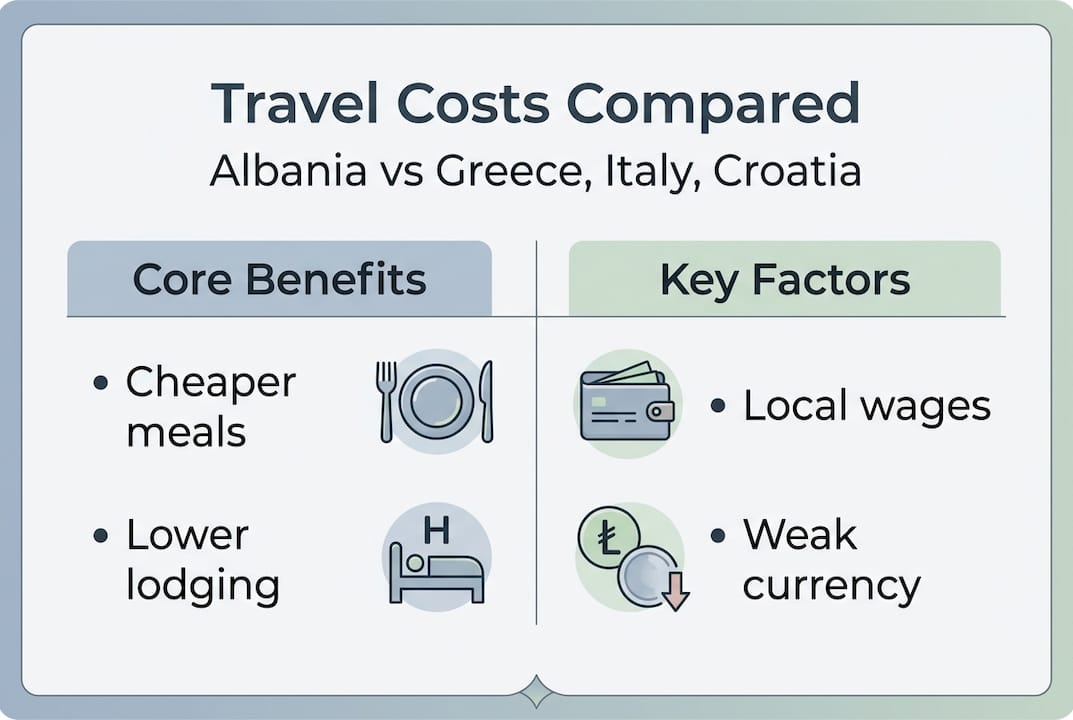
The savings are consistent across every category. Italy’s food prices run roughly 10% higher than Albania’s on average, and that gap widens significantly when you include dining out. Croatia, often marketed as a “budget” Adriatic option, still costs two to three times as much as Albania for comparable accommodations.
Here’s where Albania offers the most savings compared to its neighbors:
- Accommodation. You can find clean, well-located guesthouses for €25 to €40 per night in places where Greece charges €100 or more for the same standard.
- Dining out. A grilled fish lunch by the sea in Himara costs what a coffee and pastry costs in Santorini.
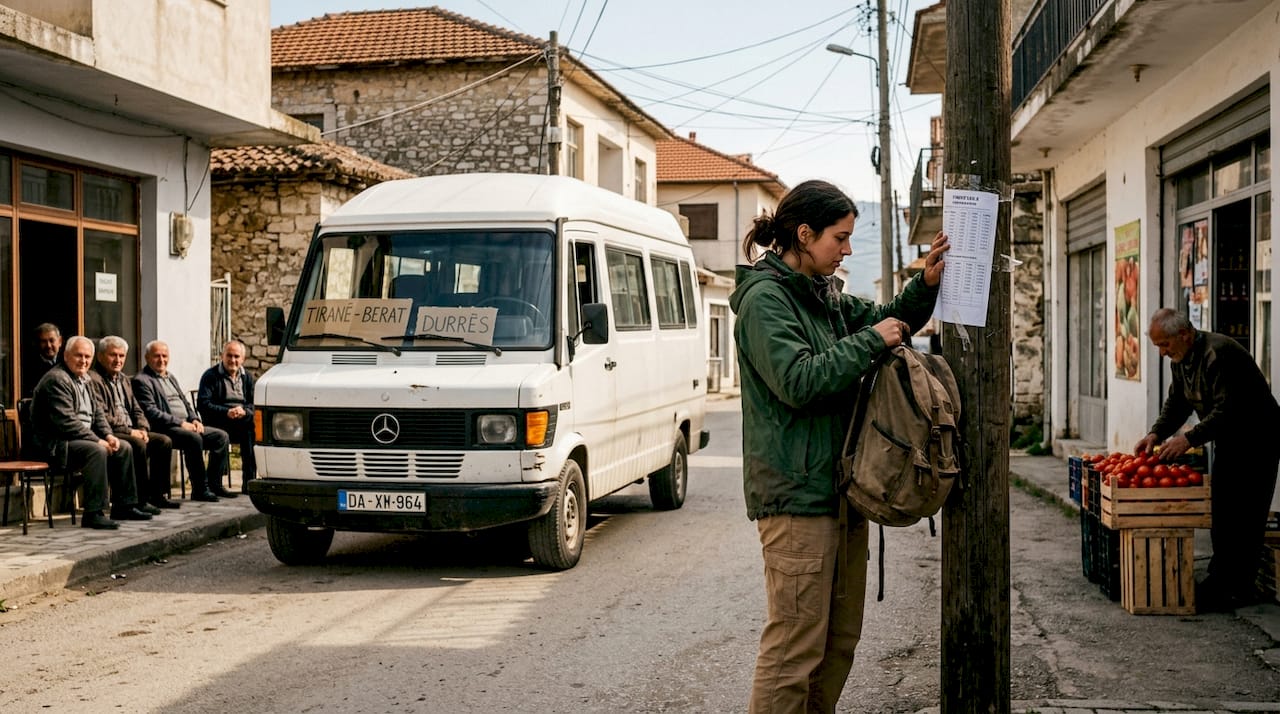
- Getting around. Shared minibuses called furgons (pronounced “foor-gons”) connect cities for a dollar or two per leg.
- Attractions and entry fees. Most archaeological sites and national parks charge €1 to €5 admission rather than the €15 to €25 that Greek ruins typically demand.
Understanding local car rental prices in Albania is also worth your time, since renting locally is dramatically cheaper than booking through international platforms and gives you freedom to reach places buses don’t go.
Everyday costs for visitors: food, lodging, and transit
Building on the comparison, let’s break down what you’ll actually spend on the ground, from meals to getting around Albania.
Knowing that Albania is cheaper is useful. Knowing exactly what things cost is actionable. Here’s a realistic breakdown for typical daily expenses:
| Item | Budget option | Mid-range option |
|---|---|---|
| Breakfast | €1.50 to €2.50 (byrek pastry + coffee) | €4 to €7 (café breakfast) |
| Lunch | €3 to €6 (local qebapçi or tavern) | €8 to €12 (seaside restaurant) |
| Dinner | €5 to €10 (home-style restaurant) | €12 to €20 (upscale local restaurant) |
| Accommodation | €20 to €35 (hostel or guesthouse) | €45 to €80 (hotel) |
| City bus or furgon | €0.50 to €2 | €2 to €4 |
| Intercity bus | €3 to €6 | €6 to €10 |
Meals generally run €5 to €15 at a typical Albanian restaurant, placing your daily food budget comfortably between €15 and €30 if you eat three solid, satisfying meals.
Here’s a simple process for building a realistic day-by-day budget before you leave home:
- Start with accommodation. Decide on your comfort level and lock in a nightly rate. Booking directly with guesthouses, especially in smaller towns, often gets you 10 to 20% off online prices.
- Estimate your meal spend. Budget €15 to €25 per day for food if you mix budget spots and occasional nicer restaurants.
- Add transportation. Intercity travel by furgon is inexpensive. Build in €5 to €10 per travel day for longer legs, and almost nothing for in-city transit.
- Factor in activities. Albania’s biggest attractions (beaches, mountains, ruins, lakes) are free or nearly free. Budget €5 to €10 per day for paid entries and activities.
- Leave a buffer. Add 15% to your estimated daily total to cover coffee stops, unexpected treats, or a spontaneous boat tour.
Pro Tip: Skip the tourist-facing restaurants right on main squares and walk one or two streets inland. You’ll find the same food for 30 to 50% less, and the clientele will be mostly locals, which is always a good sign.
For inspiration on stretching that budget across the whole country, the guide to affordable Albania adventures covers top experiences from Shkodra to Saranda without breaking the bank.
How to maximize savings without sacrificing experience
Understanding what things cost in Albania is just the start. Here’s how to optimize your budget for maximum value.
Albania rewards travelers who lean into local culture rather than seeking out westernized comforts. The most affordable experiences also tend to be the most authentic, which is a rare and valuable combination.
Here are the top cost-saving strategies that actually work on the ground:
- Stay in family-run guesthouses instead of hotels. Called “bujtina” in Albanian, these guesthouses offer clean rooms, home-cooked breakfasts, and insider tips from hosts who genuinely want you to enjoy their country. Prices often run €20 to €35 per night.
- Travel during shoulder season. May, June, and September offer warm weather, emptier beaches, and lower prices than the July and August peak. Accommodation rates in coastal towns can drop 30 to 40% between August and September.
- Eat where locals eat. Street food like byrek (a flaky pastry stuffed with cheese or meat) costs under €1. Local taverns serving grilled meats and salads serve generous portions for €5 to €8.
- Use furgons for intercity travel. These shared minibuses are the backbone of Albanian transport. Tirana to Saranda costs around €6 to €8 by furgon, far less than a taxi or rental for that distance.
- Visit free attractions. The beaches of Dhermi and Gjipe, the mountains of Valbona, and the old town of Berat are all largely free to explore. Entry fees, when they exist, are minimal.
- Shop at open-air markets. Pick up fresh fruit, local cheese, and bread for a day’s worth of snacks for under €5. Markets in cities like Korça and Gjirokastër are also culturally rich experiences.
Food prices remain favorable because local market dynamics keep costs grounded in domestic wages, which means travelers benefit from quality products at local rates rather than inflated tourist pricing.
Pro Tip: Book your transportation like an Albanian. Don’t use ride apps or tourist taxis from your hotel lobby. Walk to the nearest main road or bus station and flag down a furgon or ask a local where the shared rides depart. You’ll pay local rates, not tourist rates.
Smart travelers also look closely at affordable car rental options for road trips through the south, where buses don’t reach many of the most stunning spots. Pairing a rental for a few days with public transit for city travel is often the cheapest and most flexible approach. The team behind cost-saving hospitality practices in Albania’s sector notes that local operators routinely prioritize service quality to compete, which means your experience doesn’t suffer when you choose budget options. For more on getting around and planning smartly, our practical Albania travel tips cover the logistics in plain detail.
Why Albania’s affordability won’t last forever: our take
Here’s something most travel articles won’t tell you directly: Albania’s low prices are not a permanent feature of the destination. They are a snapshot of a specific economic moment, and that moment is already shifting.
Tourism arrivals have grown sharply over the past five years. Infrastructure is improving. Albania is actively pursuing EU candidate status, which will accelerate wage growth and align more costs with European norms over time. Coastal property values in places like Ksamil have already doubled in the past decade, and that pressure will move further inland.
Albania today is what Croatia was 15 years ago. Get in before the secret’s out.
That comparison is not dramatic. Croatia was a backpacker’s paradise in the early 2010s, and today it’s firmly mid-range at best. The same trajectory is visible in Albania right now. The experiences you can have on $30 a day in 2026 may simply not be available at that price point by 2030. Visiting now is not just smart budgeting. It’s timing the market correctly before demand catches up with supply.
Plan your affordable Albanian adventure
Inspired to see Albania while it’s affordable? Here’s how to plan the perfect budget trip.
Travel Tips Albania is your starting point for everything you need, from region-by-region cost breakdowns and guesthouse recommendations to seasonal travel guides and day trip itineraries. Whether you want to spend a week on the Riviera or explore the Albanian Alps on foot, the platform has in-depth resources built specifically for budget-conscious travelers.
One of the biggest savings most visitors overlook is transportation. Understanding why local car rental saves money versus booking through international platforms can cut your transport costs by 40% or more. Pair that with free beach access, affordable guesthouses, and €5 tavern meals, and Albania becomes one of the most rewarding budget destinations on the European continent. Start planning today while the value is still this remarkable.
Frequently asked questions
Is Albania cheaper than Greece or Italy for tourists?
Yes, Albania is noticeably cheaper than Greece and Italy, especially for eating out and accommodation. Meals cost €5 to €15 in Albania compared to €20 to €40 in Greece, and hotel rates are similarly far lower.
Can I travel around Albania on a small budget?
Travelers can easily manage on $30 a day or less by using furgons, eating at local taverns, and staying in family guesthouses, all while enjoying Albania’s best sights.
What are the main reasons Albania is so affordable?
Low local wages, a domestic currency weaker than the euro, local food production, and lower tourist demand all combine to keep costs well below what travelers pay in neighboring countries.
Are there risks of prices rising soon in Albania?
Yes, as tourism grows rapidly and Albania moves toward EU integration, prices are expected to rise noticeably over the next few years, making now an ideal time to visit.